Who Is a Fashion Designer?

1. Researching trends, fabrics, and consumer behaviour
2. Sketching original designs and creating mood boards
3. Selecting fabrics, colours, and trims
4. Developing patterns and overseeing sample production
5. Presenting collections to brands, buyers, or clients

Fashion designers generally specialise in one of three broad categories: apparel design (clothing), accessory design (bags, jewellery, footwear), or costume design (film, television, and theatre).
Eligibility Criteria to Become a Fashion Designer in India
After Class 10, some diploma and certificate programmes accept students right after Class 10, though most structured career paths begin after Class 12.
After Class 12 (Most Common Entry Point)
1. Completion of Class 12 from a recognised board, in any stream (Science, Commerce, or Arts) — there’s no mandatory subject requirement

3. No mathematics requirement – creative aptitude matters more than academic stream
For Postgraduate Programmes
1. A relevant undergraduate degree, typically in fashion design or a related field with 45–55% aggregate marks, depending on the institute
For Studying Abroad
1. Proof of English proficiency through IELTS or TOEFL, alongside a strong portfolio
Also Read – How to Become an Interior Designer in India
Skills You Need to Succeed as a Fashion Designer
Formal education builds the foundation, but these skills determine how far you go:
1. Sketching and Illustration: Designers must be skilled in translating creative concepts onto paper or digital canvases to visualise initial garments.
2. Fabric and Textile Knowledge: A strong grasp of drape, texture, and material suitability ensures that concepts function properly in real life.
3. Color Theory and Trend Forecasting: Mastering colour dynamics and predicting future shifts helps designers stay ahead of market demands.
4. Pattern-Making and Garment Construction: Technical precision in pattern generation serves as the structural backbone of every successful design.
5. Software Proficiency: Fluency in digital design tools like Adobe Illustrator, CorelDRAW, and CLO 3D is increasingly expected in the industry.
6. Business and Networking Skills: Strategic business acumen and networking are vital for designers who plan to freelance or launch their own labels.
7. Adaptability: Embracing fluid trends, emerging materials, and shifting consumer preferences is essential for long-term relevance.
Step-by-Step: How to Become a Fashion Designer in India
Step 1: Complete Your Class 12 Education – Any stream works. If you already know fashion is your direction, start building a portfolio early – sketches, mood boards, even small styling projects- since many top institutes ask for one during admissions.
Step 2: Choose the Right Fashion Design Course – Depending on your goals and budget, you can pick from:
| Course Type | Duration | Best For |
|---|---|---|
| Certificate courses | A few months to 1 year | Quick skill-building, specific niches (e.g., styling, draping) |
| Diploma in Fashion Design | 1–2 years | Faster entry into the industry, practical focus |
| B.Des / B.Sc. in Fashion Design | 3–4 years | Strong foundational and industry-recognised route |
| M.Des / PG Diploma | 1–2 years | Specialisation, leadership roles, teaching, research |
Step 3: Clear the Relevant Entrance Exams – Admission to most reputed fashion design colleges is entrance-exam-based. Common exams include:
1. NIFT Entrance Exam: Conducted for candidates seeking admission to undergraduate and postgraduate design programs across National Institute of Fashion Technology campuses.
2. NID DAT (Design Aptitude Test): Administered to evaluate creative intelligence and design ability for entry into National Institute of Design institutes.
3. CEED / UCEED: Primarily serves as an entrance portal for postgraduate (CEED) and undergraduate (UCEED) design programs at premier institutions like IITs and IISc.
4. AIEED (All India Entrance Exam for Design): Evaluates design sensitivity and problem-solving skills for admissions to Pearl Academy and other partner institutions.
5. CUET (Common University Entrance Test): Increasingly utilised by central, state, and private universities across India to streamline undergraduate design admissions.
Most of these exams test a mix of design aptitude, sketching ability, general awareness, and creative problem-solving, so start preparing at least 6–8 months in advance.
Step 4: Choose the Right Institute – Some of the most recognised fashion design institutes in India include:
1. National Institute of Fashion Technology (NIFT) — multiple campuses
2. National Institute of Design (NID)
3. Pearl Academy
4. Symbiosis Institute of Design
5. International Institute of Fashion Design (INIFD)
6. JD Institute of Fashion Technology
Course fees vary widely, from around ₹50,000 for short-term diplomas to ₹15–25 lakh+ for premium B.Des/M.Des programmes at top-tier institutes.
Step 5: Build a Strong Portfolio – Your portfolio is often more influential than your marksheet when it comes to internships, placements, or freelance work. Include original sketches, completed garments, styling projects, and any collaborative or live-project work.
Step 6: Gain Practical Experience – Internships with designers, export houses, or fashion brands are where classroom learning meets real production timelines, client feedback, and market pressure. Most reputed institutes build this into the curriculum.
Step 7: Start Your Career or Launch Your Own Label – From here, you can join an established brand, work under a designer, freelance, or eventually start your own label; each path has a different pace, but all reward consistency and a distinctive design voice.
Also Read – How to Become an Aerospace Engineer
Syllabus for Fashion Design Course in India
The fashion design curriculum combines creative expression, technical mastery, digital tools, and business strategies to prepare students for the evolving fashion industry.
1. Foundation Studies: Students begin by learning the foundational elements of design, including colour theory, composition, and texture. They study fashion history and global trends while developing fundamental skills in garment illustration, drawing body proportions, and understanding textile properties.
2. Core Technical and Design Subjects: The curriculum covers technical skills such as drafting patterns, garment stitching, and finishing techniques. Students master draping methods on mannequins, learn surface ornamentation techniques like embroidery and dyeing, and utilise digital CAD software such as Adobe Illustrator and CLO 3D.
3. Specialisations and Industry Skills: Learners explore advanced subjects including sustainable fashion practices, zero-waste design, and luxury brand management. They also gain expertise in visual merchandising, editorial styling, e-commerce strategies, and professional portfolio development.
4. Practical Learning – Students build real-world experience by creating mini-collections, conducting editorial photoshoots, and completing industry-based design assignments.
Career Paths After Fashion Designing
A fashion design qualification opens doors well beyond designing clothes:
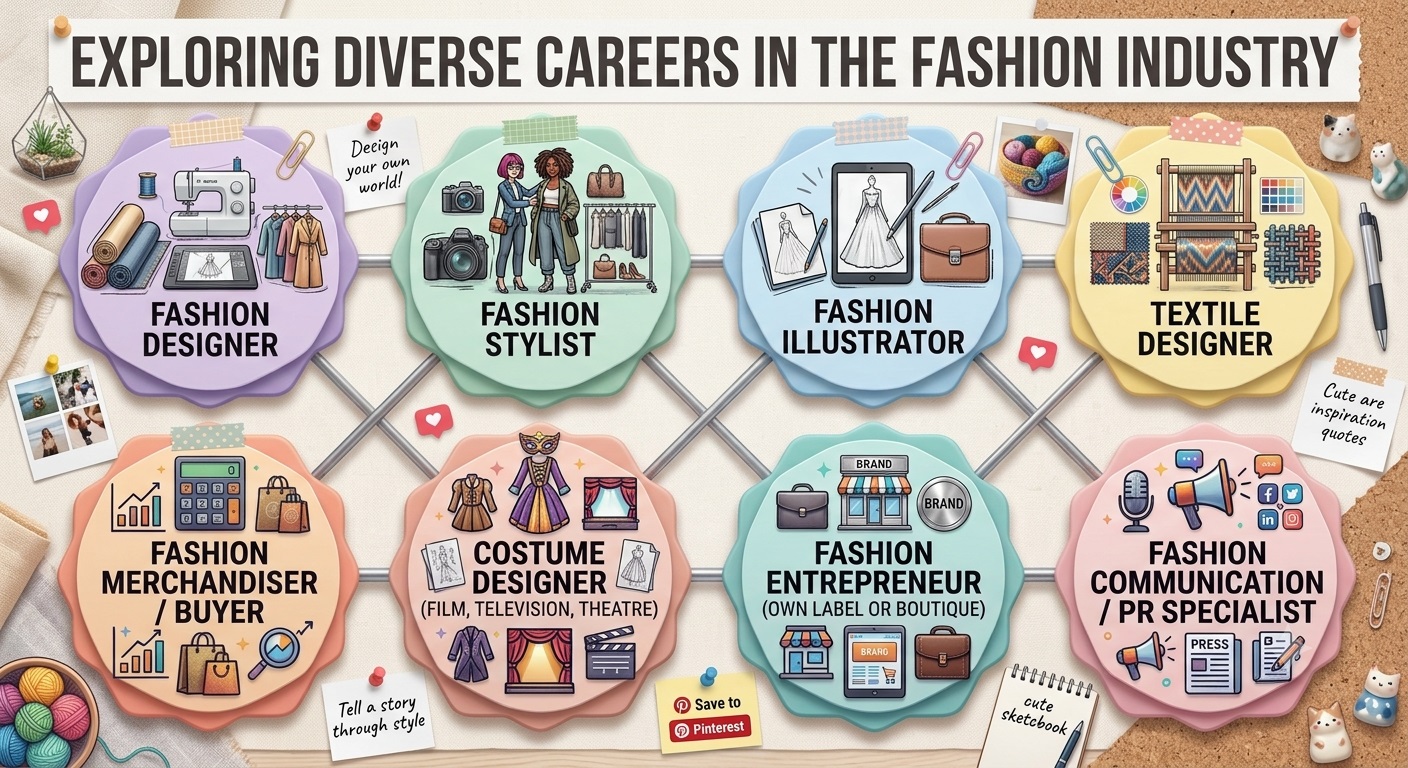
1. Fashion Designer (apparel, accessories, or costume): A fashion designer conceptualises, drafts, and creates original apparel, accessories, or costumes tailored to current trends and consumer needs.
2. Fashion Stylist: A fashion stylist selects and coordinates clothing, accessories, and props to construct visually appealing looks for photo shoots, editorial features, celebrities, and public events.
3. Fashion Illustrator: A fashion illustrator produces artistic drawings and digital sketches that communicate design concepts, garments, and styling ideas for fashion brands and publications.
4. Textile Designer: A textile designer develops unique patterns, fabric weaves, and printed textures used to produce garments, upholstery, and home furnishings.
5. Fashion Merchandiser / Buyer: A fashion merchandiser or buyer analyses market trends, predicts consumer demand, and selects product inventory to ensure profitability for retail stores and fashion brands.
6. Costume Designer (film, television, theatre): A costume designer researches, designs, and builds character wardrobes that visually support storytelling across film, television, and theatrical productions.
7. Fashion Entrepreneur (own label or boutique): A fashion entrepreneur establishes and manages their own independent clothing label, online store, or retail boutique.
8. Fashion Communication / PR Specialist: A fashion communication and public relations specialist develops brand narratives, manages media relations, and executes promotional campaigns to build a positive public image for fashion labels.
Top recruiters include brands like Zara, Mango, FabIndia, Biba, Pantaloons, Arvind Garments, and export houses, alongside opportunities to work directly under established designers such as Manish Malhotra, Sabyasachi, Ritu Kumar, and Tarun Tahiliani.
Fashion Designer Salary in India (2026)
Salary in this field varies significantly based on qualification, employer, specialisation, and city and it scales meaningfully with experience and reputation.
| Experience Level | Monthly Salary (Approx.) | Annual Salary (Approx.) |
|---|---|---|
| Fresher / Entry-level | ₹15,000 – ₹30,000 | ₹2.5 – ₹3.5 LPA |
| Junior (1–3 years) | ₹25,000 – ₹45,000 | ₹3.5 – ₹5.5 LPA |
| Mid-level (3–6 years) | ₹50,000 – ₹1,00,000 | ₹6 – ₹12 LPA |
| Senior / Creative Lead (5–8+ years) | ₹1,00,000 – ₹2,50,000 | ₹12 – ₹30 LPA |
Graduates from premier institutes like NIFT often command higher starting packages than average. Designers who build a strong personal brand, specialise (e.g., in bridal wear, sustainable fashion, or menswear), or move into leadership and entrepreneurship can see substantially higher long-term earnings. Top celebrity designers in India report earning several crores annually, though this represents the very peak of the field, not a typical outcome.
Is Fashion Designing a Good Career Choice?
Fashion design isn’t the fastest-earning career at the entry level, but it offers strong long-term growth, creative fulfilment, and flexibility, from corporate design roles to freelancing and entrepreneurship. It rewards designers who combine genuine creativity with technical skill, business awareness, and consistency over time.
FAQs: How to Become a Fashion Designer
Q1. Can I become a fashion designer without a design degree?
Yes, though it’s harder. Many successful designers started with diploma or certificate courses, strong portfolios, and hands-on experience rather than a full degree. However, a recognised degree does improve access to top brands and international opportunities.
Q2. Is mathematics required to study fashion design?
No, fashion design courses do not require a background in science or mathematics. Institutes accept students from any stream – Science, Commerce, or Arts and math is not a prerequisite for admission.
Q3. What is the best course to become a fashion designer in India?
A B.Des in Fashion Design from a recognised institute like NIFT, NID, or Pearl Academy is widely considered the strongest foundational route, though diploma courses offer a faster, more affordable entry point.
Q4. How long does it take to become a fashion designer?
A diploma can take 1–2 years, while a full B.Des programme takes 3–4 years. Many designers also pursue an M.Des afterwards for specialisation.
Q5. Do fashion designers need to know how to sew?
Not necessarily to design, but understanding garment construction and pattern-making significantly strengthens a designer’s practical skill set and credibility in the industry.