Who Is a Beautician, and What Do They Actually Do?

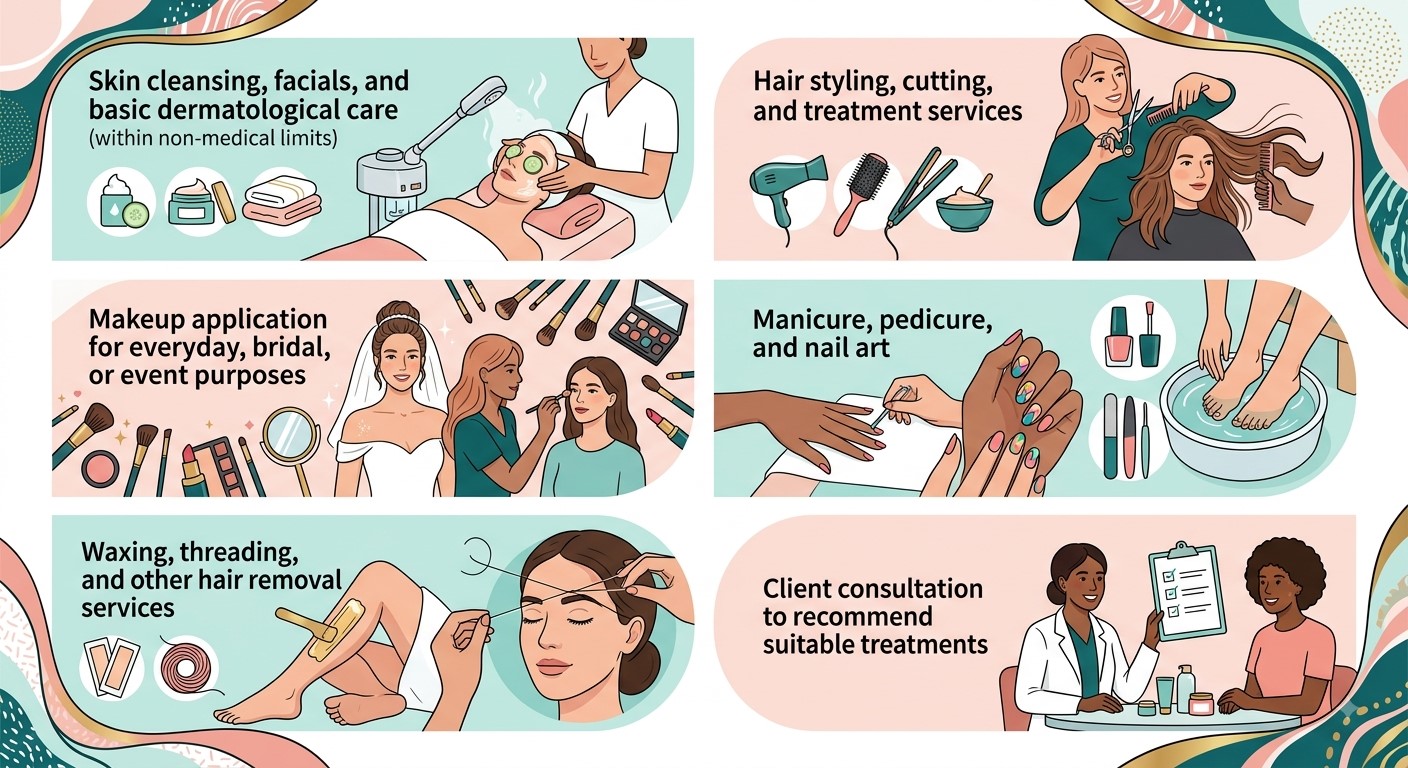
1. Skin cleansing, facials, and basic dermatological care (within non-medical limits)
2. Hair styling, cutting, and treatment services
3. Makeup application for everyday, bridal, or event purposes
4. Manicure, pedicure, and nail art
5. Waxing, threading, and other hair removal services

Many beauticians eventually specialise in one or two of these areas rather than practising all of them at a generalist level, since advanced certification and client demand both tend to reward specialisation over time.
Skills That Matter Beyond the Certificate
1. Hand-eye coordination and precision – especially for makeup, nail art, and detailed skin work
2. Product knowledge – understanding skin types, ingredients, and suitability for individual clients

4. Communication and client management – a large part of repeat business comes from how clients are made to feel, not just technical skill
5. Stamina – the work is physically demanding, often involving long hours on your feet
6. Business basics – useful early on for anyone eventually planning to freelance or open their own salon
Eligibility to Become a Beautician in India
Unlike many other professions, beautician training doesn’t have a strict, uniform entry requirement – but two common paths exist:
| Qualification / Course Level | Entry Timing | Eligibility & Requirements | Key Details & Focus |
| Beginner / Entry-Level Courses | After Class 10 | Completion of Class 10 | Open to early starters; focuses on building practical foundational skills earlier than most career paths allow. |
| Diploma & Certificate Programmes | After Class 12 | Class 12 completion (minimum 50% aggregate recommended; stream-independent) | The most common formal entry point; offers structured professional training regardless of high school subject stream. |
| Degree Programmes (B.Sc / M.Sc in Cosmetology or Beauty Therapy) | After Class 12 | Class 12 completion | Formal higher education degrees; admissions are typically merit-based rather than requiring a separate entrance exam. |
Notably, several online certificate courses have no minimum qualification requirement at all – useful for those testing interest in the field before committing to a longer, more expensive programme.
Also Read – How to Become a Makeup Artist
Course, Duration, and Cost to Become a Beautician
| Course Type | Duration | Typical Fee Range |
|---|---|---|
| Short Certificate Course | 3–4 months | ₹455 – ₹15,000 (online options at the lower end) |
| Diploma in Cosmetology/Beauty Therapy | 6–12 months | ₹15,000 – ₹60,000 |
| Advanced Diploma/Specialised Certification | 1+ years | Varies by specialisation |
| B.Sc/M.Sc in Cosmetology | 3–4 years (UG), 2 years (PG) | Varies by institute |
Online platforms like Udemy, Alison, and Skillshare offer basic certificate courses at minimal or no cost, though these are best treated as a starting foundation rather than a substitute for hands-on practical training, which employers and clients both tend to value more heavily in this field.
Free and Government-Subsidised Training Programs
This is the part most career guides skip, and it’s particularly relevant for students who can’t afford private academy fees:
| Government Scheme / Institution | Key Focus & Functionality | Major Benefits & Features |
| Pradhan Mantri Kaushal Vikas Yojana (PMKVY) | Free beauty and wellness training through government-approved centers. | Courses aligned with NSQF levels.
Monetary completion reward for successful candidates. |
| National Skill Development Corporation (NSDC) | Certifies nationwide training partners for beauty & wellness courses. | Ensures courses align with recognised skill standards. |
| Beauty & Wellness Sector Skill Council (B&WSSC) | Operates under the Ministry of Skill Development and Entrepreneurship. | Sets national curriculum & quality standards for PMKVY & NSDC courses. |
| PM Vishwakarma Yojana | Supports practical setup and independent practice after training. | Free professional toolkits.
Accessible low-interest loans. |
| National Skill Training Institutes (NSTIs) | Run by the Directorate General of Training (DGT). | Periodic short-term skill programs in key cities (e.g., Jaipur, Indore, Patna, Noida). |
A certificate earned through any of these carries the same NSQF-recognised standing as one from a private academy, which makes this a genuinely practical option rather than a lesser alternative – worth checking before committing to a paid private course.
Also Read – How to become an Actor
Specialisations Within the Beautician Field
1. Cosmetology and General Beauty Care provides the broadest foundation, covering skin care, hair care, and basic makeup application.
2. Makeup Artistry focuses on specialized techniques for bridal, editorial, film/TV, and special-effects makeup.
3. Hair Styling and Treatment trains individuals in hair cutting, colouring, styling, and restorative hair therapies.
4. Nail Art and Care covers professional manicures, pedicures, and advanced nail art techniques.
5. Spa and Wellness Therapy offers instruction in body treatments, massage-based services, and holistic wellness care.
Top Institutes to Consider for Beautician Training
Some of the more established names in India’s beauty and wellness training space include VLCC Academy, Lakmé Academy, Pearl Academy, Orane International, and the London School of Trends. Beyond brand reputation, it’s worth specifically checking whether a given institute’s certification is recognised under B&WSSC/NSQF standards, since this affects both employability and eligibility for further specialised certifications later.
Career Paths After Becoming a Beautician
1. Salon Employment allows trained beauticians to secure regular hiring opportunities with established chains such as Lakmé Salon, Naturals, and VLCC.
2. Spa and Wellness Centres provide specialized roles in luxury environments, including hotel- and resort-based spas.
3. Bridal Studios represent a high-demand, high-paying specialization tailored specifically to the Indian market.
4. Film, TV, and Theatre offer dynamic makeup and grooming roles directly within active production environments.
5. Cruise Lines and Hotels open doors for spa therapists seeking career advancement with international exposure.
6. On-Demand Service Platforms like Urban Company create a lucrative, flexible home-service income stream for freelance beauticians.
7. Independent Salon Ownership serves as a rewarding long-term goal once experienced professionals build strong client relationships and a solid reputation.
Beautician Salary in India
| Experience Level | Annual Salary (Approx.) |
|---|---|
| Entry-level | ₹2,25,000 |
| Average | ₹2,80,000 |
| Experienced | Up to ₹4,60,000+ |
Earnings vary considerably by specialisation, city, and employment type – bridal makeup artists and spa therapists at premium establishments often significantly outearn general salon employees, and successful independent/freelance beauticians can exceed these averages once an established client base is built.
FAQs: How to Become a Beautician in India
Q1. Can I become a beautician without completing Class 12?
Yes. Entry-level and beginner courses are available after Class 10, and several online certificate courses have no formal educational prerequisite at all. Class 12 becomes more relevant mainly for structured diploma and degree-level programmes.
Q2. Are government-run beautician courses (PMKVY/NSDC) as credible as private academy courses?
Yes, these are certified under the same national B&WSSC/NSQF standards that most reputable private institutes also align their curriculum to. The main trade-off is typically the scale and brand recognition of private academies versus the cost savings of government-backed training.
Q3. Do I need a degree to eventually open my own salon as a beautician?
No. A certificate or diploma, combined with sufficient hands-on experience and client-facing skills, is generally sufficient. A degree can help with more advanced specialisation or management-track roles, but it isn’t a prerequisite for entrepreneurship in this field.
Q4. How long does it realistically take to start earning as a beautician?
A short certificate course (3-4 months) can be enough to secure entry-level salon employment. Reaching a genuinely comfortable income level, especially in specialised or freelance work, typically takes 1-2 years of practical experience beyond initial certification.
Q5. Can beauticians work internationally?
Yes, particularly through cruise line spa roles, international hotel chains, and destination bridal work, though this typically requires additional certification recognised in the target country and, in several cases, English language proficiency requirements set by the specific employer.